High-Altitude Binoculars: Why Ladakh is Secretly a Bird Watcher’s Paradise
When people think of Ladakh, they usually think of snow leopards, dramatic mountain passes, or blue lakes. Nobody really talks about the birds.
And that is a massive mistake.
If you are into birding, Ladakh isn’t just a destination; it’s a goldmine. Sitting right at the intersection of the Palearctic and Oriental zoogeographic zones, this cold desert hosts over 300 species of feathered high-fliers. Many of these are rare Himalayan birds found in Ladakh that you simply cannot spot anywhere else on the planet.
Grab your long lenses. It’s time to talk about bird watching in Ladakh.
The Ultimate High-Altitude Guest List
The wetlands, marshes, and scrub forests of Ladakh are highly active environments, particularly during the spring and summer months. In Ladakh, the region serves as an important stopover site for migratory birds flying across the Himalayas.
Here are the headliners you should be looking out for:
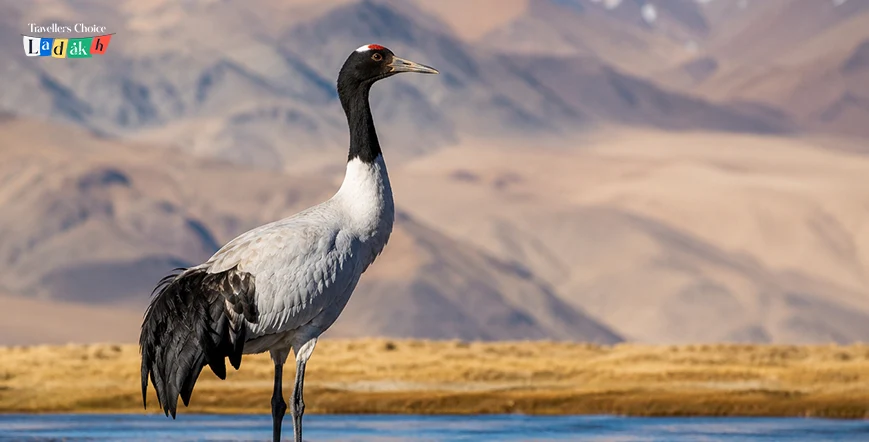
- The Black-Necked Crane: The undisputed celebrity of the trans-Himalayan plateau. Elegant, rare, and deeply respected by locals, these birds breed in high-altitude wetlands like Tsokar. Spotting a breeding pair is basically the bird-watching equivalent of seeing a shooting star.
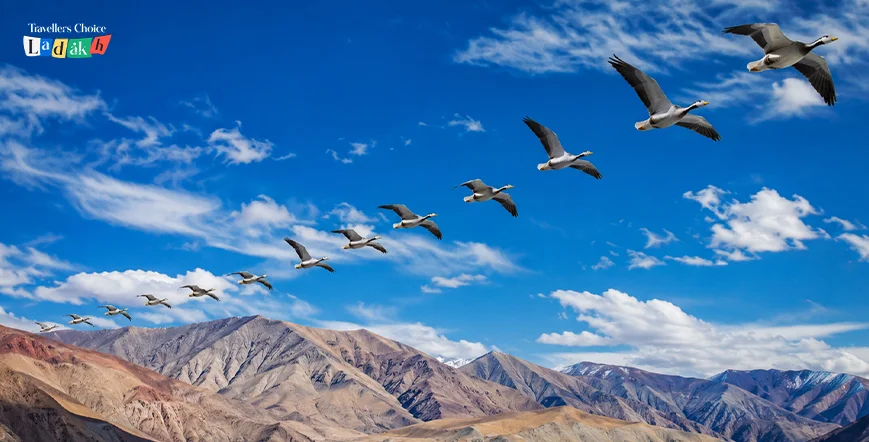
- The Bar-Headed Goose: These absolute legends fly over the Mount Everest range to get here. Yes, you read that right. They regularly cruise at altitudes of over 20,000 feet just to hang out in Ladakh’s lakes.
- The Tibetan Snowcock: If you hear a loud, bubbling whistle high on a rocky scree slope, look up. These chunky, camouflaged birds are masters of hide-and-seek.
- Golden Eagles: The heavy-metal rulers of the Ladakhi skies. They glide effortlessly on thermals, hunting marmots and scanning the valleys with terrifyingly sharp eyes.
Where the Action Happens
You can’t just stand in the middle of a dusty road in Leh and expect a rare falcon to land on your shoulder. You need to know the right spots.
If you’re hunting for the absolute best places for bird watching in Ladakh, write these down:
- The Indus River Belt (Shey to Choglamsar): A fantastic, accessible starting point right near Leh. The marshes here are perfect for spotting ibisbills, water pipits, and various ducks.
- Tsokar and Tso Moriri Lakes: The holy grail for wetland species and migratory high-fliers. The brackish waters of Tsokar are especially famous for black-necked cranes.
- Nubra Valley: The sandy dunes and buckthorn patches host scrub-dwelling Himalayan birds like the white-browed tit-warbler and various rosefinches.
For shutterbugs, these wetlands and riverbanks serve as premier bird-photography locations in Ladakh, offering unmatched contrast between colorful plumage and stark, desolate backgrounds.
How to Plan the Perfect Birding Expedition?
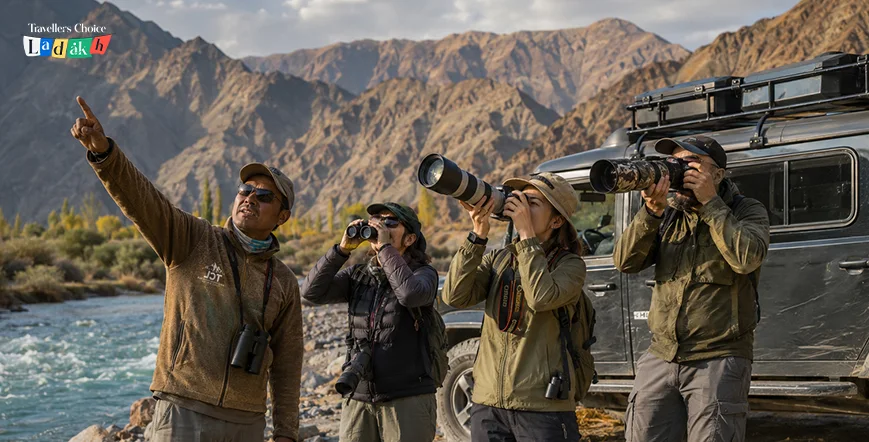
First things first: timing is everything. The best time to visit Ladakh for bird watching is between May and September. During the winter, almost everything freezes over, and the birds wisely head south to warmer climates.
Secondly, don’t try to wing the logistics. High-altitude birding requires patience, serious acclimatization, and a vehicle that won’t leave you stranded in a remote marshland.
At TravellerChoiceLadakh (TCL), we get it. We don’t just throw you into a standard tourist bus. We are locals, which means we know the quietest, least crowded spots to observe wildlife in Ladakh without disturbing delicate habitats.
If you’re ready to plan your trip, we recommend starting with our comprehensive Ladakh travel guide to get a solid grasp of high-altitude travel. Ready to book your vehicle and hit the field? Let our team customize one of our specialized places to visit in Leh Ladakh itineraries to ensure your binoculars are always pointed in the right direction.
Pack your telephoto lens. The sky is putting on a show, and you definitely don’t want to miss it.
Frequently Asked Questions
The Black-Necked Crane is widely considered the most iconic and rare bird breeding in Ladakh. Spotting this endangered species in the high-altitude wetlands of Changthang is a major highlight for any birder.
Unlike lush tropical forest birding, Ladakh offers high-altitude desert habitats. You get to witness birds adapted to cold, arid environments and spot incredible migratory species as they navigate the mighty Himalayan ranges.
Yes. A good telephoto lens (at least 400mm) is highly recommended because birds in these wide-open landscapes can be skittish. A sturdy tripod and warm, windproof clothing are also essential for early morning shoots.
No, winter is too harsh. Most migratory birds leave the region by late October. The prime window for migratory species is from May to early September, when the wetlands are fully thawed.