Ladakh’s Silent Sentinels: The Story of Its War Memorials and Kargil History
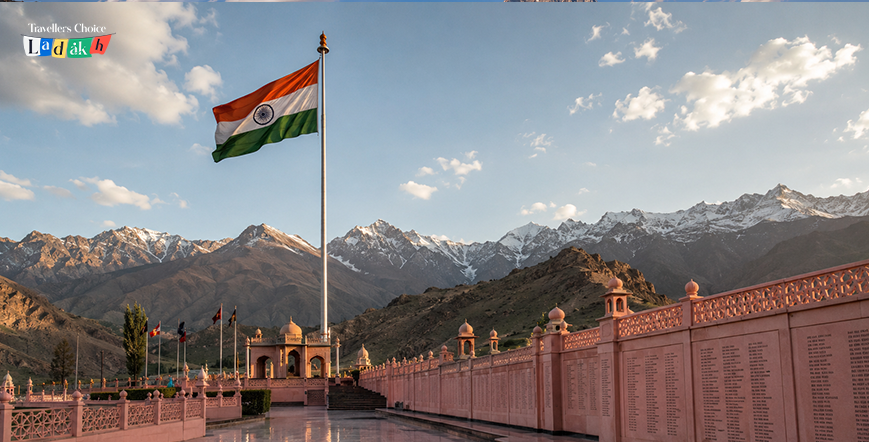
Standing at the base of Tololing Heights in Dras, the Kargil War Memorial forces you to pause.
You look up at vertical cliff faces rising into a pale blue sky. You feel the freezing wind whipping off the ridges. And suddenly, the sheer scale of what happened here in the summer of 1999 hits you in the chest.
Visiting the Kargil War Memorial gives you a sobering, front-row lesson in bravery, geography, and human grit. Here is the story behind these silent mountain sentinels and how to experience them on your trip across the high desert.
1. The Ridge Lines of 1999
To understand what took place, you have to look up.
During the Kargil War in 1999, enemy forces stealthily occupied high-altitude outposts along the Line of Control, directly threatening National Highway 1D, the single lifeline connecting Srinagar to Leh.
To learn about the Kargil War, history is to gaze up at rock faces like Point 4875 (Batra Top), Tiger Hill, and Tololing, all near vertical. Indian soldiers fought uphill, scaling bare granite cliffs, under direct fire from artillery, to regain every inch of ground.
Operation Vijay officially succeeded on July 26. Every year on July 26, India celebrates Kargil Vijay Diwas to honor the ultimate sacrifice of the 527 soldiers who lost their lives on these heights.
2. Inside the Grounds of Remembrance
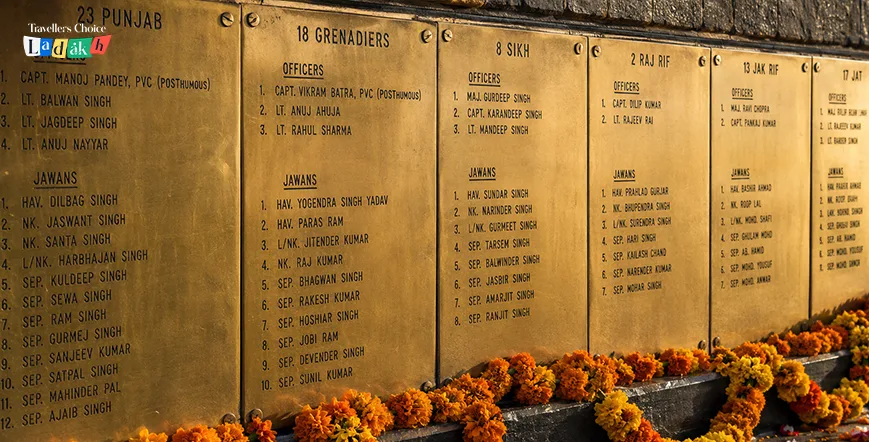
The centerpiece of the Kargil War Memorial is the Wall of Heroes, a majestic pink-sandstone structure bearing brass plates engraved with the names of every fallen soldier.
The Indian Army built and maintained it for the purpose of education and inspiration:
- The Eternal Flame: The Amar Jawan Jyoti burns continuously under the shadow of a massive 100-foot national tricolor flag.
- Captain Manoj Pandey Gallery: Named after the posthumous Param Vir Chakra hero, this museum displays battle maps, personal letters, seized war equipment, and battlefield relics.
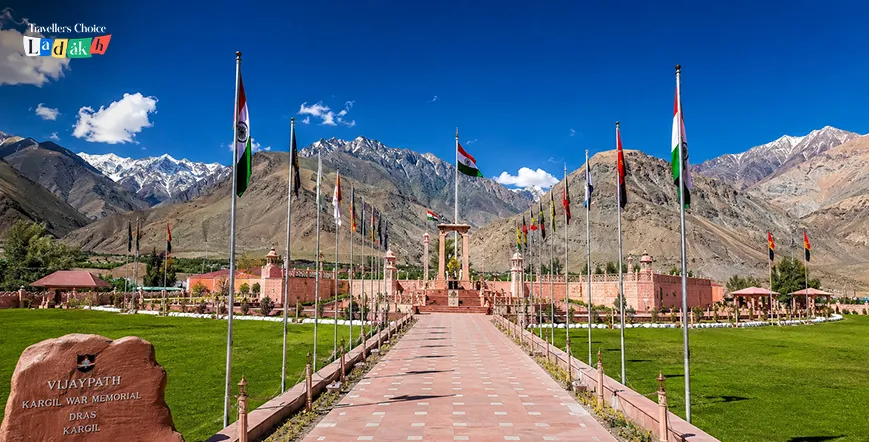
- Veer Bhumi: A peaceful pathway lined with memorial stones detailing the precise battles where officers and jawans made their stand.
As noted in detailed historical records like this Kargil War Memorial overview, the complex stands right where the sound of artillery once echoed through the valley. Visitors interested in exploring more military history across Ladakh can also visit the Kargil Hall of Fame in Leh.
3. Beyond the Memorial: Exploring the Valley
While most visitors rush straight from Srinagar to Leh, the valley holds some of the most moving places in Kargil on the circuit.
The area has been turned into a tourist-friendly paradise with the advent of tourism in Kargil, once a war-torn region. While making a list of the places to visit in Kargil, don’t overlook the places not on the Highway:
- Hunderman Village: A border village frozen in time, offering a rare glimpse into life along the LOC.
- Mulbekh Chamba: A towering 30-foot rock-cut Maitreya Buddha statue dating back to the 8th century.
- Suru Valley: Dramatic mountain roads leading toward the twin peaks of Nun and Kun.
From historic battlefield ridges to ancient cliff carvings, top Kargil attractions blend culture, history, and raw landscape, making it an essential chapter in overall Kargil Ladakh tourism.
4. Planning Your Visit
When planning your trip to the Kargil War Memorial, time your route carefully. Dras sits roughly 5 kilometers before Kargil town when coming from Srinagar, or about a 5-hour drive west from Leh.
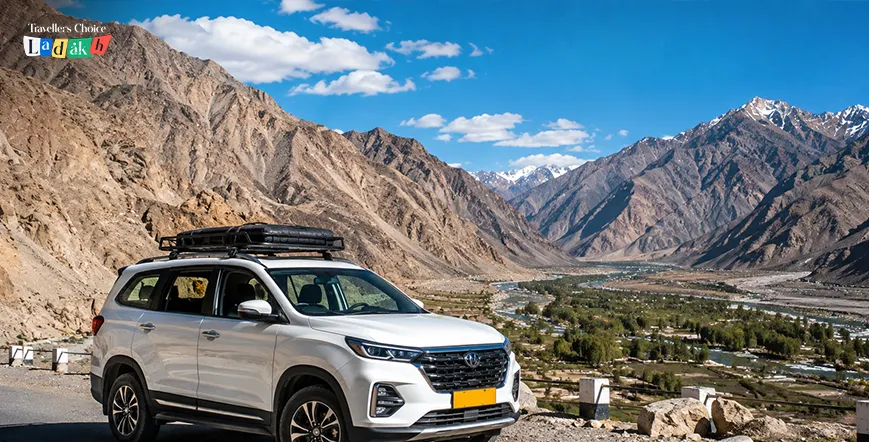
Because high mountain roads can be demanding, driving with an experienced mountain chauffeur ensures a smooth, stress-free trip. At TravellerChoiceLadakh (TCL), our drivers know every turn of the Srinagar-Leh highway. You can easily book a comfortable 4×4 from our private cab rental fleet to explore Kargil and Dras at your own pace.
The Verdict
Visiting the Kargil War Memorial is not just a rest stop on the road; it’s a moment to reflect on living history. Remove your hat, proceed down Vijaypath, and pay homage to those who helped keep these mountain roads clear.
The high passes belong to the brave.
Frequently Asked Questions
The memorial is located in Dras, Kargil district, directly along the Srinagar-Leh National Highway (NH1), roughly 5 kilometers from Dras town center and 53 kilometers from Kargil.
The memorial is open to everyone, and admission is free. It is open daily from 9:00 AM to 6:00 PM in the summer and from 7:00 AM to 7:00 PM in the winter.
While the memorial is open year-round, public access is restricted between July 23 and July 26 due to official military ceremonies and high-security events for Kargil Vijay Diwas.
Plan to spend at least 1 to 2 hours to walk down Vijaypath, pay respects at the Wall of Heroes, read soldiers’ stories, and visit the Captain Manoj Pandey Gallery.
One thought on “Ladakh’s Silent Sentinels: The Story of Its War Memorials and Kargil History”