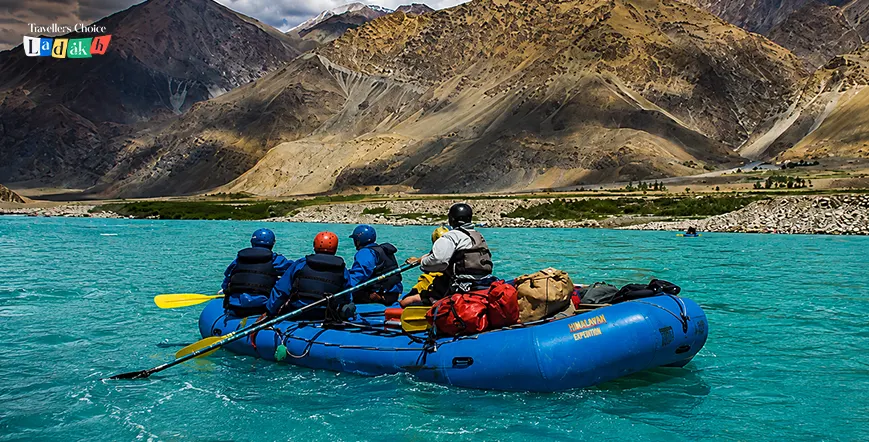
Beyond the Indus: Ladakh’s New Rafting Routes
River Rafting in Ladakh is not just about a gentle float in the Indus River. The region’s whitewater frontier has more to offer that you don’t want to miss out on. Classic day trips like Phey to Nimu remain popular for river rafting in Leh. However, seasoned paddlers are pushing far past these commercial stretches.
They are heading into unseen territory on multi-day, self-contained expeditions. They tackle Class IV+ gorges along the Zanskar, Tsarap Chu, and Shyok rivers. Adventurers crave sheer vertical-wall canyons and extreme technical challenges. Standard day runs cannot provide this level of wilderness isolation for river rafting in Ladakh. Below, we break down these uncharted river routes and their technical difficulty levels. We also cover essential cold-water gear, acclimatization rules, and safety logistics for Ladakh adventure tourism.
Why Move Beyond the Classic Indus Stretch?
Many adventure-seekers in Ladakh start on the Indus River. The Indus offers steady Class II and III rapid river rafting and easy road access for beginners.
On the other hand, the Zanskar River canyon has a much tougher challenge for you. Check out the breakdown below to compare rapid grades, water temperatures, and evacuation logistics.
| Expedition Attribute | Indus River (Phey to Nimu) | Zanskar River 152 km Expedition |
| Paddler Level | Beginner to Intermediate | Advanced / Expert or Technical Whitewater Rafters |
| Duration | 2 to 4 Hours | 7 to 9 Days |
| Rapid Classification | Class II to Class III | Class III to Class IV+ Continuous |
| Water Temperature | 10°C to 14°C in Summer | 4°C to 8°C during Glacial Melt |
| Evacuation / Cell Access | Roadside access within minutes | Roadless canyon such as Helicopter/foot evacuation |
Choosing the deeper Zanskar routes means more than just river rafting in Leh Ladakh. You set out on a remote wilderness journey through limestone gorges that rise 900 meters above you, and going downstream is the only way out.
The 152 km Zanskar River Expedition Challenge
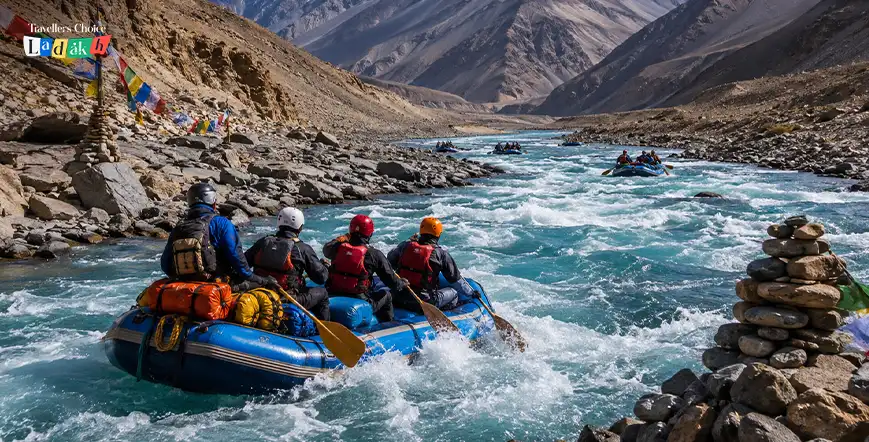
The Zanskar River Expedition covers 152 km of river rafting, making it India’s most challenging whitewater adventure. It starts at Remala and ends at the Sangam confluence in Nimoo. If you are seeking real adventure sports in Ladakh, then it’s the right choice.
Highlights of the Zanskar Expedition Route
- Isolation in the Wild: After you enter the gorge below Zangla, you won’t see a road for days. Make sure to use strong cam straps to secure your gear.
- Challenging Rapids: At the famous Gate Rapid, the river narrows to just 18 feet. Always scout this area from the right side before entering. If you are a beginner, then approach this technical stretch with extra caution.
- High-Altitude Swimming Risks: If you fall in at 11,000 feet, the 5°C water can give a cold-shock response. The icy terrain has its own swimming risks for beginners, so don’t forget your kayakers for safety.
Lesser-Known Rivers for River Rafting in Leh Ladakh
Beyond the Indus and Zanskar rivers, there are other rivers you can explore during your adventure activities in Ladakh. Check out some lesser-known rafting rivers below, starting with options that may suit more experienced paddlers.
- Shyok River: The Shyok is one of them, running through Nubra Valley below the Karakoram Range. Its class II-III rapids suit those looking for a bit of an upgrade from the Indus. Double-humped Bactrian camels and dunes are seen around Panamik and Sumur.
- Suru River: The Suru valley close to Kargil is also largely uncharted for trade expeditions. Water from glaciers and shifting channels is challenging for pioneers, and it points to the next direction for adventure activities in Ladakh. To get a detailed list of the classic stretches, read our Ladakh Travel guide on River Rafting in Ladakh: Top Places for an Adrenaline Rush.
River Rafting in Leh Ladakh: Best Season & Weather Windows
Timing is of the essence for river rafting in Ladakh, as river flow varies with the season. Check the water difficulty levels and the best weather windows below.
- If you are an advanced rafter, then Leh Ladakh in July is the best season for you, as heavy glaciers melt. As a result, massive ice blocks melt into water, and wave currents are strong. If you are capable of class IV+ hydraulics, then it’s for you.
- For wilderness campers, August is the best season as water levels stabilize and temperatures are comfortable.
- Early September is best if you are waiting for glaciers to melt. The rivers turn crystal-clear and blue, with only technical currents. During periods of low water, rafters have the greatest underwater visibility, allowing them to see hazards in advance.
Who Should Try These New Rafting Routes?
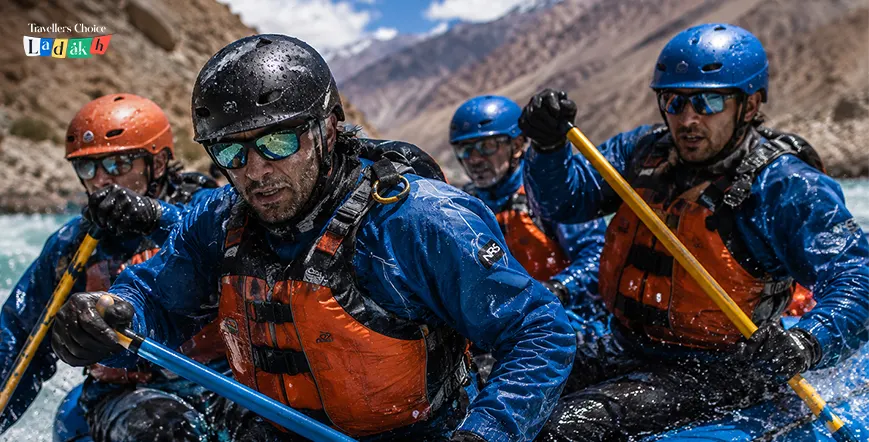
These newer routes are still best suited for more advanced-level paddlers. The Indus River is still the best choice for first-time paddlers. An expedition to Zanskar and Suru demands a high level of physical fitness. You should be able to enjoy camping for several days and be free of serious heart or breathing problems. Being able to swim is also important, especially for rescues in remote canyons where help may take longer to arrive.
Planning Your Expedition: Permits & Credentials
When planning a safe trip, keep in mind the timing and verified operator credentials.
No permits are required for regular travel in the Zanskar Valley, including at put-in points such as Remala. The environment fee is payable only as usual for Ladakh. Make sure to verify whether your guides are certified by the International Rafting Federation (IRF). Make sure they are up to date with their wilderness first aid skills, within the last 3 years.
Your Partner Beyond the Indus
You cannot make mistakes when you go river rafting in Ladakh. That is why Traveler Choice Ladakh is a trusted choice for high-altitude adventure with uncompromising field safety. Each multi-day run is accompanied by IRF-certified river guides, safety kayakers, and 4mm thermal drysuits. Our logistics team monitors live river discharge and weather patterns, and dynamically adjusts routes. From a short float on the Indus to a 9-day Zanskar gorge expedition, we arrange permits and satellite tracking and set up wilderness camps!
Frequently Asked Questions
River rafting in Ladakh is not completely safe for heart patients. It’s a high-altitude region where air pressure and oxygen levels are low.
The best season for river rafting in Ladakh is from late June to mid- September. July to August brings maximum glacial meltwater, due to which you can raft in class IV waves. On the other hand, early September is best for technical paddlers.
A standard river rafting trip in Leh costs somewhere between Rs. 1500 and Rs. 2500. The cost also includes transport, safety instructions, and rental gear. However, the Zanskar Valley trek can cost more as it’s a multi-day expedition.
The choice is up to you, as the Indus River is better for beginners or short day trips. On the other hand, the Zanskar River is best for extreme adventure sports in Ladakh.
Due to high altitude and glacial water temperatures ranging from 4°C–8°C, 4mm–5mm neoprene wetsuits or drysuits are essential. Then, high-buoyancy PFDs, whitewater helmets, and neoprene booties are important. You must not forget dry bags for gear protection and polarized sunglasses while packing for travel adventures in Ladakh.