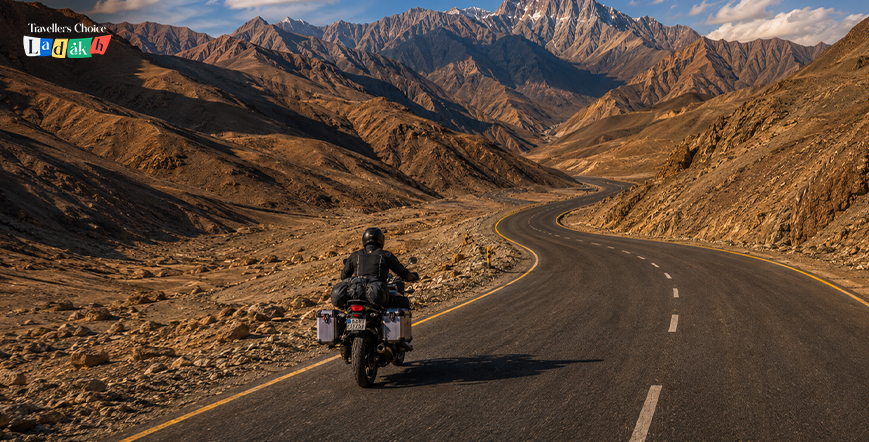
What 1,000 km of Roads Taught Me About Bike Riding in Ladakh
Riding 1,000 kilometers across the highest motorable passes on Earth changes your perspective fast.
The mountains don’t care about your Instagram aesthetic, your expensive riding jacket, or how fast you ride on highway straightaways.
When you spend a week clocking serious saddle hours across passes like Khardung La, Chang La, and the loose gravel tracks of Changthang, you learn lessons the hard way. Here is what a 1,000-kilometer Ladakh road trip actually teaches you about bike riding in Ladakh, machine mechanics, and mountain survival.
1. Respect the Thin Air (Your Engine Will Too)
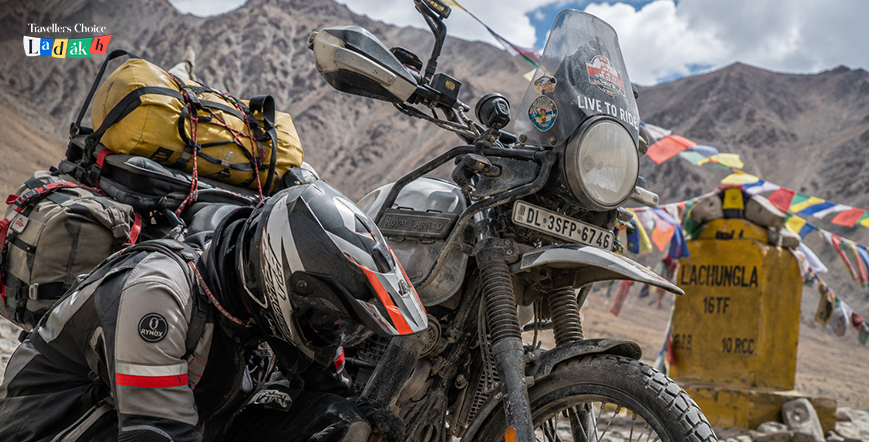
At 17,500 feet, there is roughly 40% less oxygen in the air.
If you’re out of breath just tying your boot laces, imagine how your engine feels. Carbureted engines stutter, fuel-injected bikes lose top-end grunt, and sudden throttle twists do nothing except waste gas.
- Feather the throttle: Smooth, gradual acceleration keeps your engine from stalling on steep inclines.
- Keep momentum: Stopping halfway up a loose gravel switchback is a mistake you only make once.
- Watch engine heat: Long mountain climbs strain cooling systems. Listen to your machine.
Mastering altitude management is essential for any successful bike trip to Ladakh.
2. Water Crossings Are Mind Games
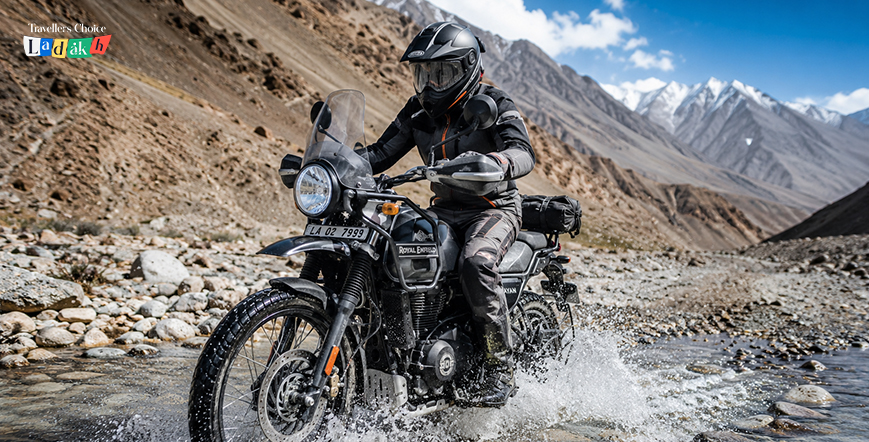
The river crossing you see on YouTube at 10 AM is a warm-up puddle. That same stream at 4 PM, when glaciers melt under maximum sunlight, is a raging, ice-cold torrent.
When approaching water crossings (pagal nallahs), speed is your enemy.
Walk the line first if you aren’t sure of the depth. Keep your bike in first gear, hold a steady throttle, and never pull the clutch halfway through the stream. If you drop the bike into freezing meltwater, restarting it takes serious physical effort.
High-altitude maintenance updates from the Border Roads Organization (BRO) confirm that road conditions change hourly. Adaptability is mandatory for safe bike riding in Ladakh.
3. Fuel Math and Remote Loops
Outside Leh town, gas stations become legendary rumors.
If you plan a Leh-Ladakh bike trip covering Nubra, Pangong, and Hanle in a single continuous loop, standard fuel tanks won’t cut it.
- Always top off: Never pass an open fuel pump, even if your tank is three-quarters full.
- Carry Jerry cans: Secure metal or heavy-duty plastic fuel cans low on your luggage setup to keep your center of gravity stable.
- Account for low mileage: Heavy gear, steep climbs, and headwinds reduce your fuel efficiency by up to 30%.
4. Renting Local Beats Shipping Your Own
Shipping a personal bike 2,000 kilometers across India sounds great on paper until you arrive in Leh with a blown shock absorber, cracked rim, or transport delay.
Local mountain conditions require bulletproof reliability, making bike riding in Ladakh far easier when you pick up a locally prepped machine.
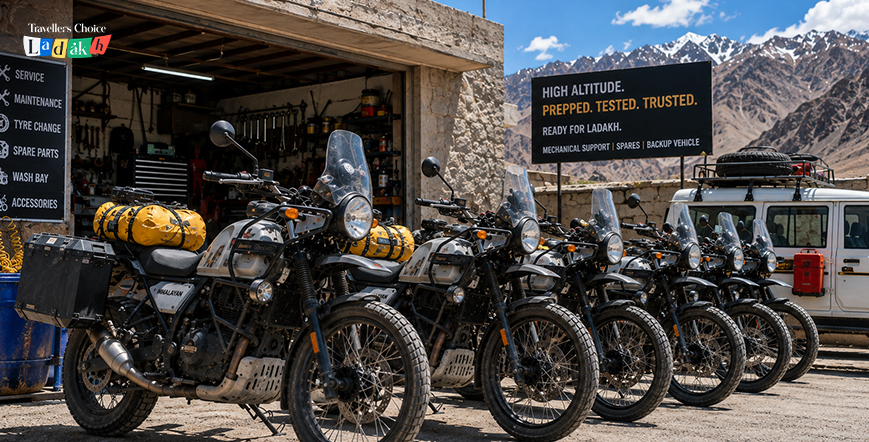
Riders often choose specialized Ladakh bike packages or rent directly upon arrival. At TravellerChoiceLadakh (TCL), we maintain a garage of high-altitude-tested motorcycles. From Himalayan 450s to classic Royal Enfields, our bike rental packages come fully serviced with heavy-duty bash plates, luggage racks, and emergency spares.
Whether you want to ride solo or book through the best Ladakh bike trip organizers for full support vehicle backing, riding a machine tuned for local terrain makes all the difference. If you are searching for the best Ladakh bike trip package tailored to your timeline, having local mechanics on standby keeps your focus where it belongs: on the open road.
The Verdict
A long-distance ride through the high desert isn’t about bragging rights or high speeds. It’s about rhythm, respect for the terrain, and listening to your machine.
Respect the mountains, prepare your gear, and enjoy every single kilometer of bike riding in Ladakh.
The high passes are waiting.
Frequently Asked Questions
Adventure motorcycles like the Royal Enfield Himalayan 450, BMW GS 310, or the battle-tested Royal Enfield Bullet 350/500 are ideal for their high ground clearance, low-end torque, and comfortable, upright riding ergonomics.
Indian citizens require a valid physical Smart Card Driving License (MCWG). Foreign nationals must carry their original domestic driving license alongside a valid International Driving Permit (IDP).
While riding solo is possible on major routes, having a support vehicle or riding in a small group is strongly recommended for remote circuits such as Hanle, Zanskar, and Tso Moriri in case of a mechanical breakdown or altitude sickness.
In high-altitude terrain, aim for no more than 120 to 180 kilometers per day. Mountain passes, water crossings, and unpaved gravel tracks significantly slow down average travel speeds compared to highway riding. Carrying physical documents like your DL, RC, and permits is mandatory at military checkpoints when riding a bike in Ladakh.