Living Above 15,000 FT: How People Survive in Ladakh’s Harshest Winters
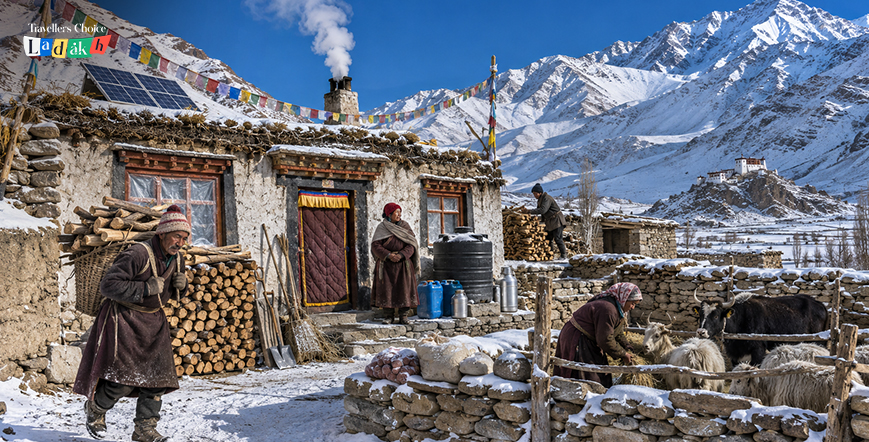
When winter grips the Trans-Himalayas, the landscape transforms into an unforgiving ice desert. Thermometers regularly drop below -20°C, mountain passes choke under heavy snow, and running water freezes solid inside underground pipes.
To outsiders, winter in Ladakh sounds like an unlivable survival movie. Yet, for centuries, the people of the high desert haven’t just survived at 11,000 to 15,000 feet; they have thrived.
Behind the dramatic snowscapes lies an ingenious blueprint of ancient architecture, high-fat diets, and deep community resilience. Here is the ground-level reality of high-altitude living when the temperature drops through the floorboards:
1. Mud Bricks & Solar Glass: The Thermal Envelope
Surviving a winter in Ladakh starts with how you build your shelter. Traditional architecture here is a masterclass in passive solar engineering.
Traditional homes are built from thick, sun-dried mud bricks and heavy wooden beams, rather than modern concrete, which absorbs and radiates cold like a block of ice. Mud walls act like thermal batteries, absorbing heat from the high-altitude sun during the day and gradually releasing it inward during the cold night.
To lock in warmth, winter survival in Ladakhi homes relies on strategic layout:
- Small Windows & Thick Curtains: Windows face south to capture maximum solar gain while minimizing drafts.
- The Shelkhang (Glass Room): Attached glass sunrooms trap solar radiation, creating a warm buffer zone that stays comfortable even when it is -15°C outside.
- Livestock Below: Historically, livestock occupied the ground floor (Tangra), using their collective body heat to warm the family living quarters directly above.
2. The Chansa and the Bukhari: Heart of the Home
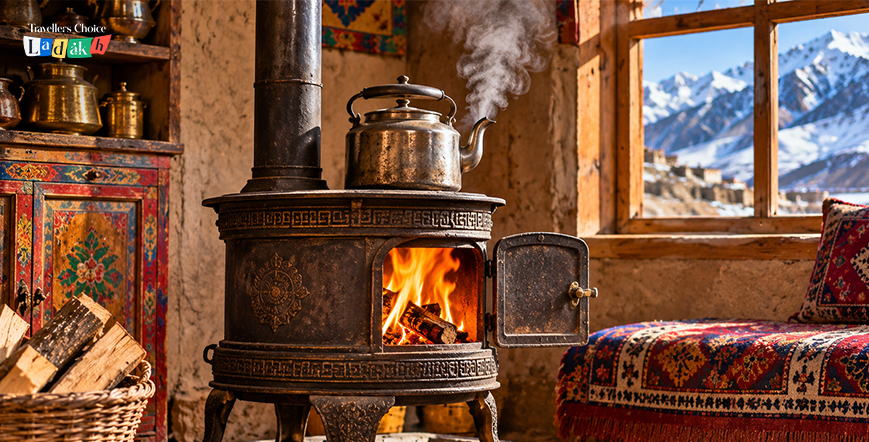
To understand Life in Ladakh in winter, look no further than the Chansa (traditional kitchen).
During the coldest months, the kitchen becomes the absolute center of domestic life. The family eats, socializes, and often sleeps together in this single insulated room. At the middle of it all sits the Bukhari—a heavy metal wood-and-dung-burning stove equipped with a long chimney pipe that radiates steady heat throughout the space.
From brewing endless pots of Gur Gur Chai (salted butter tea) to drying thick wool socks above the hearth, the Bukhari keeps life moving when outdoor activity grinds to a halt.
3. High-Fat Fuel: What Sustains Life at 15,000 Feet
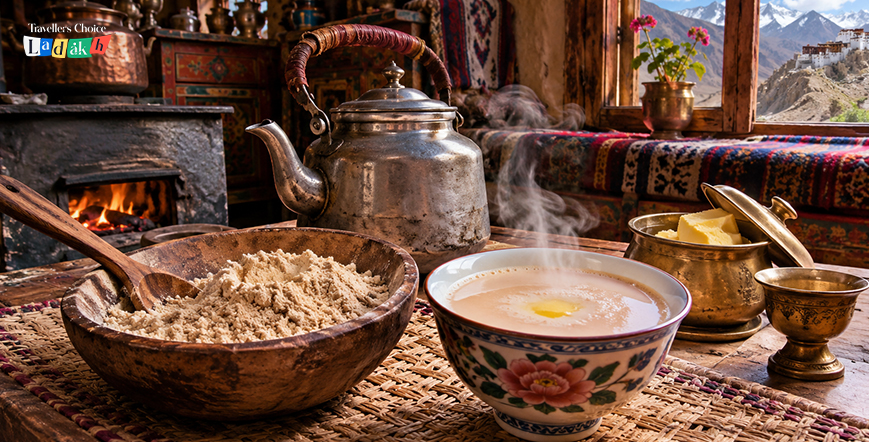
If your body is burning twice as many calories just to maintain the core temperature in the thin air, salads won’t suffice. The menu for Winter Life in Ladakh consists of high-fat, high-carbohydrate comfort foods that have been designed for high altitudes:
- Tsampa (Roasted Barley Flour): The ultimate mountain superfood. Rich in complex carbs, Tsampa requires no cooking—it is rolled with butter tea into dense, energy-packed dough balls.
- Gur Gur Chai (Salted Yak Butter Tea): More than a hot beverage, this salty, buttery brew prevents high-altitude dehydration and chapped lips while providing essential fats.
- Skyu and Thukpa: Hearty, thick handmade pasta stews packed with root vegetables, dried yak meat (Sha Tsho), and aromatic broth that warms you from the inside out.
4. Heavy Wool and Community Bonds
Before synthetic down parkas existed, the high-desert dress code relied on nature’s finest insulation: local sheep and yak wool.
Locals wear the Goncha, a long, heavy woolen robe tied tightly at the waist with a colorful sash (Skerag). The extra fabric above the waist belt creates a deep pocket for personal items, teacups, or even warm water flasks. Paired with felt boots (Pabu) and pashmina shawls, traditional attire traps a micro-climate of warm air around the body.
Just as important as winter survival is Bes, another tradition of communal support, a deep-rooted one at that. If a mountain pass freezes over and the villages are isolated for weeks, neighbors exchange firewood, shovel snow off flat mud roofs together, and gather for winter monastic festivals.
5. Experiencing Winter Isolation with TCL
True winter in the Himalayas isn’t just for the villagers anymore. Today, intrepid travelers can see this raw, beautiful season in action with the right logistics in place.
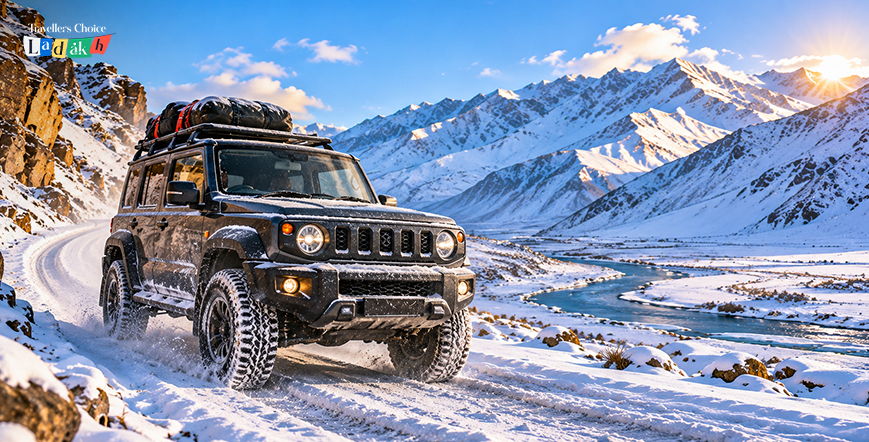
We are Traveller Choice Ladakh (TCL), and we specialize in high-altitude and cold weather travel. Whether you are coming to see snow leopards at Hemis or traveling through icy valley roads, you can enjoy heavy-duty 4×4 SUVs with heated cabins and professional local drivers through our Ladakh car rental service. Traveling with a guide and some local professionals means a safe, warm, and acclimatized winter frontier experience.
The Verdict
Living above 15,000 feet in sub-zero cold isn’t about fighting nature, it is about knowing how to live alongside it.
Step inside a sunlit mud home, cup a hot bowl of butter tea in your hands, and you’ll realize that Ladakh’s harshest season is also its warmest, most authentic time of year.
The frozen desert is waiting.
Frequently Asked Questions
People in Ladakh survive winter by using passive solar mud-brick architecture, heating homes with central wood/dung stoves (Bukhari), wearing heavy woolen Gonchas, eating high-calorie diets based on barley (Tsampa), butter tea, and meat stews, and maintaining strong community support networks.
Barley flour (Tsampa), stored during the winter, is the staple of the traditional winter diet; salted yak butter tea (Gur Gur Chai), hearty noodle and pasta stews (Thukpa and Skyu), and dried vegetables and sun-cured meats are also important parts of the traditional winter diet.
Winter temperatures in Leh typically range between -5°C and -15°C at night, while higher plateaus like Changthang, Zanskar, and Dras routinely plunge below -25°C to -35°C.
Traditional Ladakhi homes have thick mud walls, south-facing glass rooms that store solar heat during the day (Shelkhang), and central metal stoves (Bukhari) stoked with wood or dried animal dung.