Frozen Innovation: How Ladakh Crafts Its Own Water Out of Thin Air
If you think managing your household water bill is stressful, imagine living in a place where it only rains about 3 inches a year, yet your entire life depends on snowmelt.
Welcome to the high-altitude reality of the cold desert.
Driven by the harsh Himalayan climate, the region gets almost zero rain during the spring planting season. Every drop of water counts. But as climate change in Ladakh speeds up glacial melt, the traditional sources of mountain water are shrinking fast.
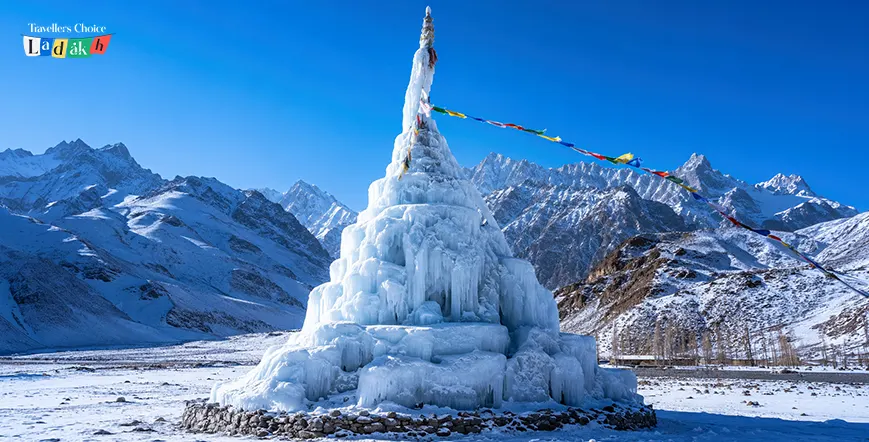
Instead of waiting for help, local visionary engineers and villagers decided to hack physics. They started building giant, conical ice towers that store millions of liters of frozen water right through the winter.
The Birth of the Ice Stupa
When spring arrives in Ladakh, farmers need water to plant their barley and wheat crops. The problem? Natural glaciers sit way up high and don’t melt until mid-summer, long after the planting window has closed. This creates a severe seasonal water scarcity in Ladakh.
Enter Sonam Wangchuk and the revolutionary ice stupa project.
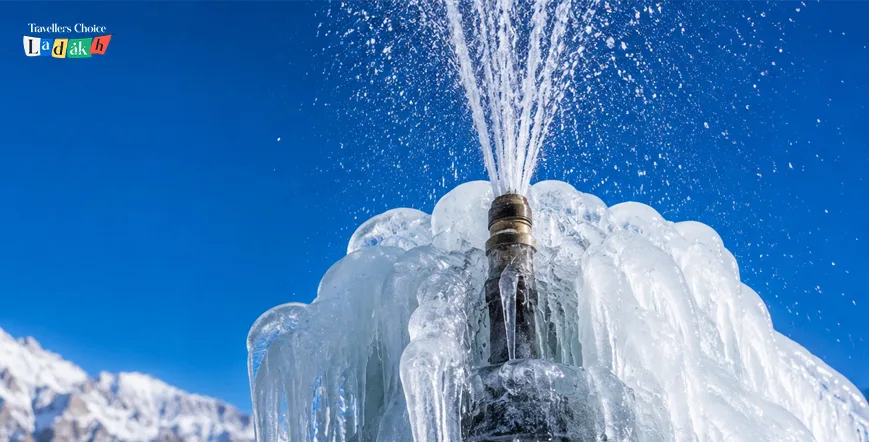
The concept is wildly clever, yet strikingly simple. During the freezing winter months, mountain stream water is piped downhill. Using gravity and zero electricity, the pressure forces the water up through a vertical pipe, spraying it high into the sub-zero air.
As the fine mist falls, it freezes instantly into a massive, conical tower of ice shaped like a traditional Buddhist stupa. Because of its unique geometric shape, it has a tiny surface area exposed to the sun. This means these artificial glaciers in Ladakh melt super slowly, trickling precious water directly into agricultural fields right when spring planting begins in April and May.
It is one of the most brilliant examples of sustainable water management on the planet.
Traditional Wisdom Meets Modern Engineering
The Ice Stupa isn’t the first time Ladakhis engineered their own water solutions. Long before modern tech, a legendary local engineer named Chewang Norphel (famously known as the “Ice Man of India”) built flat artificial glaciers high up on mountain slopes to trap winter runoff.
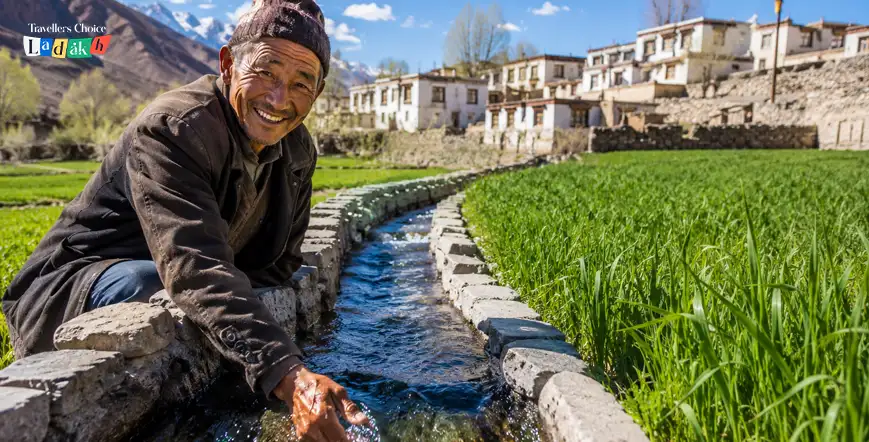
Every village relies on these clever engineering marvels alongside ancient water conservation methods in Ladakh like Kuls (intricate, hand-dug diversion channels) to share mountain streams fairly.
Understanding how local communities protect their fragile surroundings is vital if you want to explore responsibly. Take a look at our guide on the biodiversity of Ladakh’s high-altitude meadows to see how water, wildlife, and native plants form a delicate balance high up in the mountains.
How Travelers Can Help Protect the Desert?
When you travel to high-altitude regions, you aren’t just a spectator; you are part of the local ecosystem. Tourism brings wonderful opportunities, but it also places a heavy strain on the limited water supply.
Here is how you can support local water conservation efforts in Ladakh when you visit:
- Ditch the daily linen washes: Keep your hotel towel for a few extra days. Every wash cycle consumes precious local groundwater.
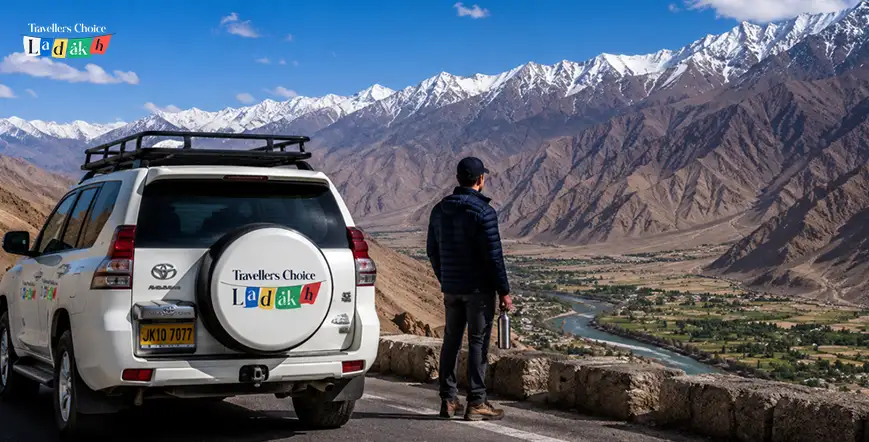
- Refill, don’t discard: Skip single-use plastic water bottles. Carry an insulated metal flask and use filtered water refilling stations in Leh.
- Bucket baths over hot showers: A traditional bucket bath uses less than a third of the water consumed by a running shower head.
- Travel with mindful locals: Choose local tour companies that respect the environment and actively support eco-friendly tourism practices.
At TravellerChoiceLadakh (TCL), we care deeply about preserving our home. As a family-run local agency, we build eco-conscious itineraries, work with sustainable homestays, and ensure our drivers respect the local terrain. Whether you’re booking a ride from our taxi rental fleet or planning a custom expedition, we help you experience the roof of the world without leaving a heavy footprint behind.
The Final Takeaway
Water is not only a story of survival in Ladakh, but it’s a story of human ingenuity. The Ice Stupa project is an example of how, when confronted with an environmental challenge, local communities can come up with solutions that can change the world just by using gravity and cold air.
Pack your reusable bottle, respect the local resource limits, and come see these ice towers in person.
Frequently Asked Questions
An Ice Stupa is a conical artificial glacier created by freezing mountain stream water vertically during winter. It stores millions of liters of water and melts slowly in spring, providing crucial irrigation water for local farmers when natural glaciers remain frozen.
Ladakh is a high-altitude cold desert receiving extremely low rainfall (less than 100mm annually). Local agriculture relies almost entirely on snow and glacier melt. Climate change is causing glaciers to recede rapidly, making water conservation essential for the region’s survival.
Yes! The best time to see the Ice Stupas in full form is during late winter and early spring (February to April) in villages across the Leh district like Phyang and Gya. By early summer, they slowly melt away to feed the surrounding crops.
Tourists can save water by taking brief bucket baths instead of long showers, reusing towels in hotels, carrying reusable water bottles instead of buying plastic, and staying at eco-friendly homestays that practice dry toilet composting or water harvesting.