The Lost Kingdom of Zanskar: Ancient Villages, Legends and Forgotten Trails
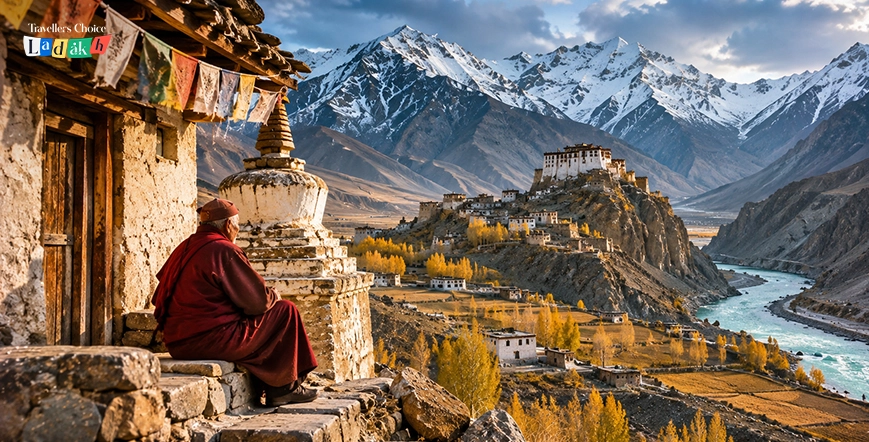
Located between the Great Himalayan Range and the Zanskar range and until not long ago the Zanskar Valley was the kingdom of the Buddhist people. Sometimes snow isolates it from the outside world for up to 8 months of the year and it’s the isolation that saves it. Here, for centuries almost untouched, remain Cliffside monasteries, mud-walled villages, royal forts and ancient trade trails.
For those who seek the undisturbed historical spots in Ladakh, Zanskar is the one. This guide introduces you to the history, old villages, sacred tales, lost trails and – above all else – how to plan a heritage trip in the Zanskar Valley.
Planning your first trip to the region? Start with our Leh Ladakh tour packages price guide to get a feel for budgets and itineraries.
Zanskar Valley History: A Kingdom Shaped by Isolation
Zanskar was formerly divided into two small Buddhist states with capital at Dhum and Zangla respectively, until the 1830s. This later became part of the Dogra state and then in modern times, of the state of Ladakh. Regardless of this, its royal families, monastic estates and village councils maintained the majority of the past lifestyle.
One can see a lot of this history from the perspective of geography. The settlements of the valley are grouped around three rivers – the Stod (Doda), Tsarap (Lungnak) and Zanskar, the confluence of these two rivers near Padum. None of the routes in and out goes over a high pass or into a deep gorge and, therefore, outside influence was slow to reach.
A living museum of Tibetan Buddhist culture is thus created. Layers here include pre-Buddhist Bon religion, relics from the Kushan era and the teachings of Indian tantric masters.
Ancient Villages and Royal Strongholds of Zanskar
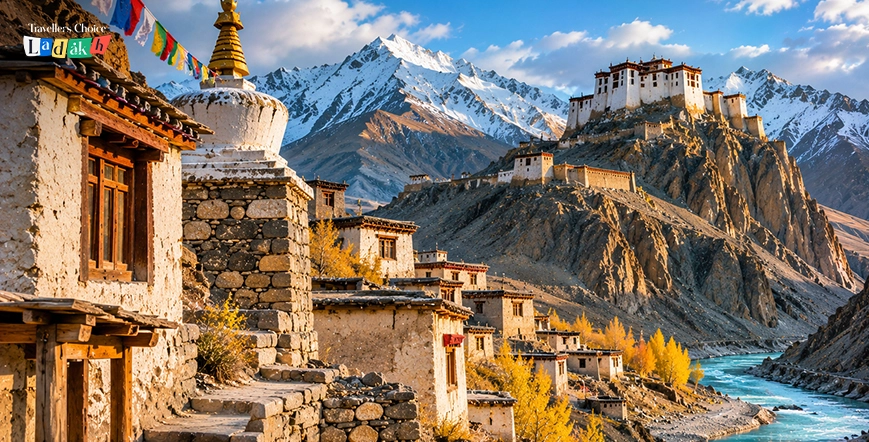
The villages of Zanskar are small, self-contained and constructed of stone, mud brick and precious timber. All of them are a part of the valley’s story.
Padum: The Gateway Capital
Padum is administrative capital and the biggest town of Zanskar district, named for the Buddhist master Padmasambhava. It is located at the confluence of the Stod and Tsarap rivers, thus forming the natural centre of all three river corridors. The base of most travellers is at Padum from where they go on day trips to the monasteries and villages around it.
Zangla: The Forgotten Royal Seat
Zangla was the capital of a once autonomous royal dynasty dating back to the 11th century. The mud-brick houses of the village are set on a hilltop, with a crumbling fort perched on top. It is here that the Hungarian scholar Alexander Csoma de Kőrös worked on the first dictionary in Tibetan-English in 1823, and Zangla is an unassuming landmark in world scholarship as well.
Karsha: Village of the Great Monastery
Karsha village is located below Karsha monastery (Gelugpa) on the opposite side of the river in Padum. Old murals and ancient scriptures are to be found inside of the tumbling down whitewashed buildings on the steep hillside. The view from the roof of the monastery and out across the valley to Padum is one of the best in the valley.
Sani: Home of Zanskar’s Oldest Shrine
Sani is one of the oldest religious sites in the Stod Valley, which is regarded as the site of Zanskar’s oldest religion. The Kanika Stupa, traditionally attributed to the Kushan Emperor Kanishka, is believed to be built around the 2nd century. The monastery of the village which is walled in and the nearby cremation ground have a peaceful, old-fashioned feel.
Kargiak and Shadey: Life at the Edge
Kargiak and Shadey are some of the most remote villages in the Lungnak Valley of Ladakh. The families here live by the farming of barley and raising of yaks, goats and sheep in stone houses, constructed over generations. It takes days to walk to them and this is the reason for their untouched state.
Want to experience this way of life up close? Read our guide to authentic Ladakh village tourism and homestays.
Ladakh Ancient Monasteries: The Sacred Heart of Zanskar
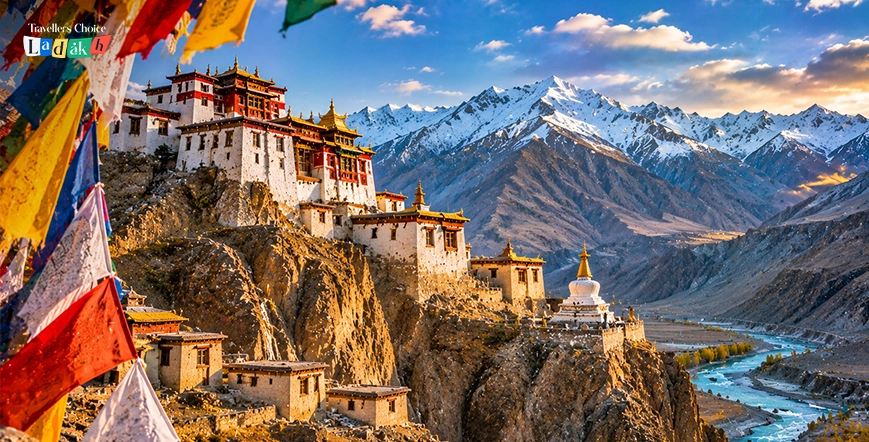
Zanskar holds some of the most dramatic ancient monasteries in Ladakh, many of them older and far less visited than the famous gompas around Leh. Here are the ones every heritage traveller should know.
| Monastery | Location | Why it’s special |
| Phuktal (Phugtal) | Lungnak Valley | Built into the mouth of a huge cliffside cave; reached only on foot |
| Karsha | Above Karsha village, near Padum | Largest Gelugpa monastery in Zanskar, with old murals and scriptures |
| Sani | Stod Valley | Home to the Kanika Stupa, linked to Emperor Kanishka |
| Zongkhul | Stod Valley, on the Umasi La route | Cliffside caves where the yogi Naropa is said to have meditated |
| Stongde | Ridge above Stongde village, near Padum | Hilltop monastery with sweeping views of the central Zanskar plain |
Phuktal Monastery is the valley’s most iconic sight. Its name joins phug (cave) and tal (liberation), and the monastery spills down the cliff like a honeycomb. It was formally founded in the 15th century, but legend says sages meditated in the cave long before that.
If you love monastery culture, plan around a festival. Our guides to the Thiksey Gustor Festival and the Diskit Gustor Festival in Nubra show what masked Cham dances look like in Ladakh’s bigger gompas.
Myths, Legends and Sacred Caves
Zanskari folklore mixes pre-Buddhist Bon traditions, Kushan-era memory and the miracles of Indian tantric masters. Ask a local elder about any old chorten and you’ll likely hear a story.
The Cave of Liberation at Phuktal
Local belief holds that Buddhist sages, Arhats and Guru Padmasambhava meditated inside Phuktal’s great cave more than a thousand years ago. A spring inside the cave is considered sacred, and pilgrims say its water never runs dry.
Naropa’s Footprint at Zongkhul
At the cliffside Zongkhul Monastery, tradition says the 11th-century Indian yogi Naropa meditated in two caves here. Monks point to a footprint pressed into the solid rock, said to have been left by him.
The Mon Builders
Zanskar’s oral history credits the Mons, an ancient people linked to the era of Emperor Kanishka, with building around 30 early chortens, temples and monasteries in the valley. The original foundations at Karsha and Sani are often attributed to them. Historians debate the details, but the legend shows how deep Zanskar’s roots go.
Forgotten Trails and Historic Routes of Zanskar
Before roads arrived, monks, traders and villagers crossed high passes and frozen rivers to reach the rest of the world. Many of these routes are now some of the finest treks in the Indian Himalaya.
| Trail | Connects | Key pass or feature | Historic role |
| Chadar (frozen river) | Zanskar to Leh | Frozen Zanskar River gorge | The only winter lifeline when passes were snowed in |
| Darcha–Padum route | Zanskar to Lahaul (Himachal) | Shingo La, about 5,091 m | Caravan trade route below sacred Mount Gumbok Rangan |
| Great Zanskar Traverse | Lamayuru to Padum | Singge La (about 5,050 m), Sirsir La (about 4,800 m) | Linked remote villages like Lingshed and Photoksar |
| Umasi La timber trail | Kishtwar (J&K) to Zanskar | Glaciated Umasi La | Porters carried roof beams into the treeless valley |
The Chadar: Walking on a Frozen River
For centuries, the frozen Zanskar River was the valley’s only winter link to Leh. Villagers walked across shifting ice between sheer canyon walls to trade, study or seek medical help. Today the Chadar is a famous winter trek, usually done in January and February. Read our winter in Ladakh guide before you plan a cold-season trip.
Old Trails, New Roads
The old Darcha–Padum caravan route now has a modern successor. The Nimmu–Padum–Darcha road crosses the same Shingo La (also called Shinku La) and is changing how travellers reach the valley. Our Nimmu-Padum-Darcha road guide covers the route, road conditions and fuel stops in detail.
Zanskar Heritage Tourism: Planning Your Trip
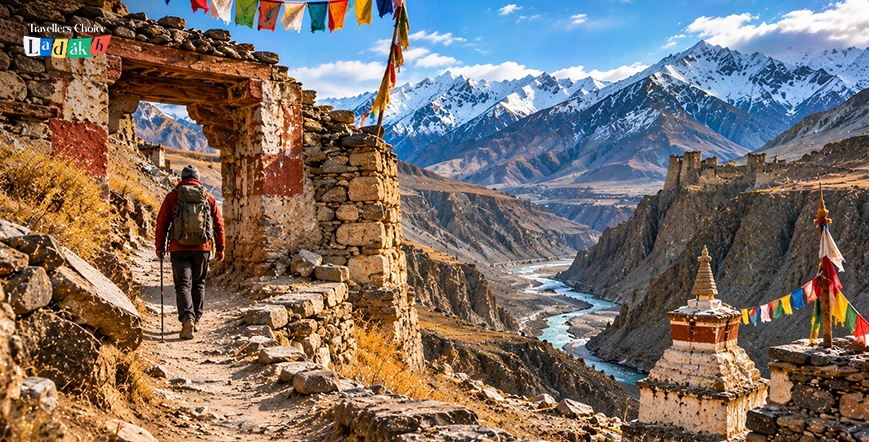
Zanskar heritage tourism is growing, but the valley is still remote. A little planning goes a long way.
How to Reach Zanskar
- Via Kargil: The classic road route goes from Kargil through the Suru Valley and over Pensi La to Padum. Kargil is easy to reach from Leh or Srinagar. See our Srinagar to Leh route guide for the highway details.
- Via Darcha (Lahaul): The newer road over Shingo La connects Padum with Himachal Pradesh and Manali.
- Via Nimmu (Leh): The Nimmu–Padum road along the Zanskar River is opening up a shorter link from Leh.
A sturdy vehicle with an experienced local driver is strongly recommended. Browse our Ladakh car and tour packages, or if you ride, our Ladakh bike packages.
Best Time to Visit
- June to September: Roads and passes are open, villages are green with barley and most monasteries are easy to reach.
- January to February: Only for the Chadar frozen river trek, with an experienced operator.
- October to May: Snow closes most routes, though new roads are slowly extending the season.
Tips for Responsible Heritage Travel
- Acclimatise first. Spend two to three days in Leh or Kargil before heading to Zanskar’s high passes.
- Carry cash and fuel. ATMs and fuel stations are scarce beyond Kargil and Padum. Our Ladakh fuel stops guide helps you plan.
- Respect monastery etiquette. Dress modestly, walk clockwise around stupas and ask before photographing monks or prayer halls.
- Stay local. Homestays put money directly into village families and give you a real taste of Zanskari life.
- Leave no trace. Carry plastic waste out of the valley; there is very little waste management in remote villages.
- Check permits. Rules for Indian and foreign nationals change from time to time, so confirm current requirements before you travel.
Need a place to stay before or after Zanskar? See our Ladakh hotel booking options.
Frequently Asked Questions
Zanskar was once made up of two independent Buddhist principalities, ruled from Zangla and Dhum, until the 1830s. Heavy snow isolates it for up to eight months a year, so its royal and monastic heritage survived largely untouched.
The top heritage sites are Phuktal Monastery, Karsha Monastery, the Kanika Stupa at Sani, Zangla’s royal fort, Zongkhul Monastery and Stongde Monastery.
Phuktal was formally founded in the 15th century. Legend says the cave it is built around was used for meditation more than a thousand years earlier.
Yes. Zanskar is usually added to a Ladakh itinerary via Kargil and the Suru Valley, and needs at least four to five extra days. Newer roads from Darcha and Nimmu are making access easier.
June to September is best for road trips, village visits and monastery tours. January and February are only for the Chadar frozen river trek.