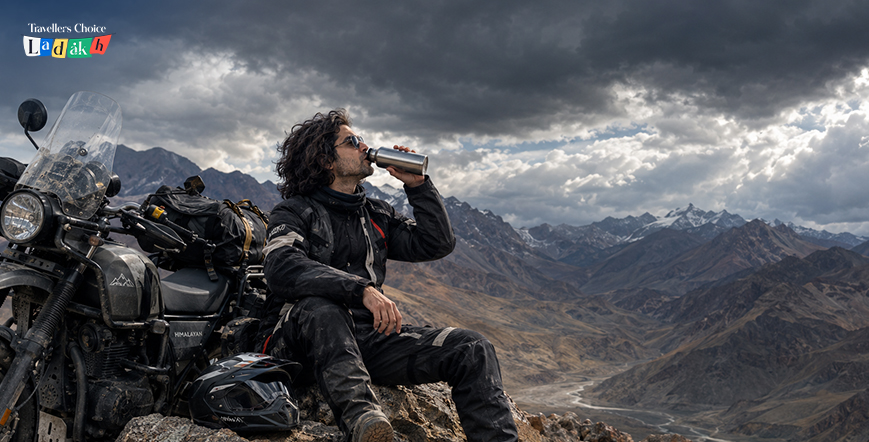
What Nobody Tells You About AMS on a Ladakh Bike Trip
You fly into Leh at 11,500 feet, step off the plane feeling like a rockstar, and pick up your Royal Enfield. 24 hours later, your head is throbbing like a bass drum and climbing a single flight of stairs feels like running a marathon.
Welcome to the unvarnished reality of high-altitude riding. Acute Mountain Sickness doesn’t care how many gym sessions you logged or how tough you think you are. Here is what every rider needs to know before twisting the throttle.
1. Physical Fitness Won’t Save You
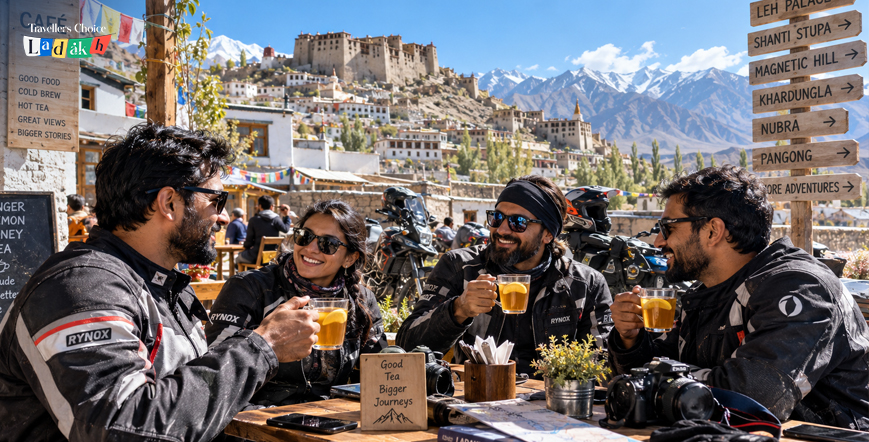
The biggest myth on the mountain is that gym rats are immune.
But in reality, AMS comes from the oxygen level in your blood and your genes, not your 100 kg bench press. When you arrive in Leh or come from Manali, the pressure drops, and with each breath you get about 30% less oxygen than at sea level.
If you push hard right away, high altitude sickness will pull the emergency brake for you.
2. Recognizing the Warning Signs Early
Ignoring subtle signals on a Leh Ladakh bike trip is the fastest way to ruin your ride.
The most common altitude sickness symptoms start small:
- The Band-Like Headache: A persistent, dull ache behind your eyes that doesn’t go away with a single glass of water.
- Loss of Appetite & Nausea: Food suddenly looks unappealing, and even the smell of local soup makes you queasy.
- Brain Fog & Fatigue: Feeling unusually exhausted or dizzy after simple tasks like strapping gear onto your luggage rack.
By medical standards, if you develop a severe headache accompanied by nausea above 2,500 meters, you are experiencing Acute Mountain Sickness.
3. Prevention Over Panic: The 48-Hour Rule
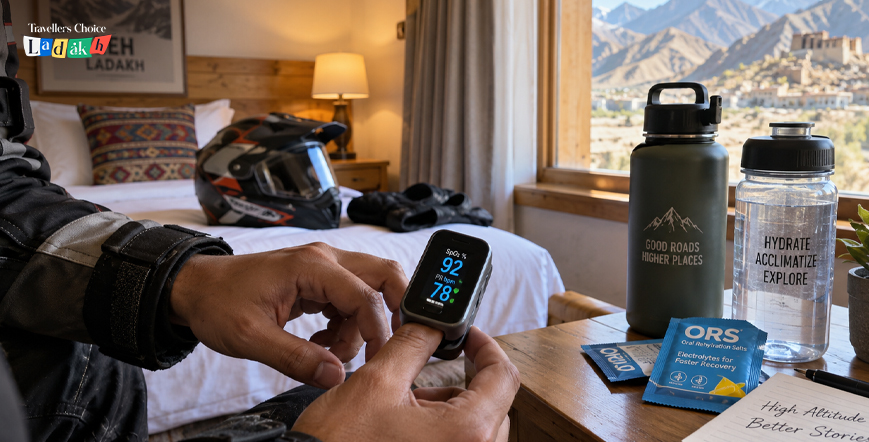
You cannot out-ride thin air, but you can outsmart it.
The best solution to avoid Acute Mountain Sickness is to spend a minimum of 48 hours in Leh and then ascend to the Khardung La or Pangong Lake.
- Hydrate Constantly: Drink 3 to 4 liters of water daily. Dehydration accelerates symptoms fast.
- Avoid Alcohol and Sedatives: Alcohol depresses your breathing rate, starving your blood of oxygen when it needs it most.
- Consider Acetazolamide (Diamox): As outlined in the official CDC High Altitude Travel Guide, preventive medications can help speed up natural acclimatization.
4. What To Do When Altitude Hits Hard
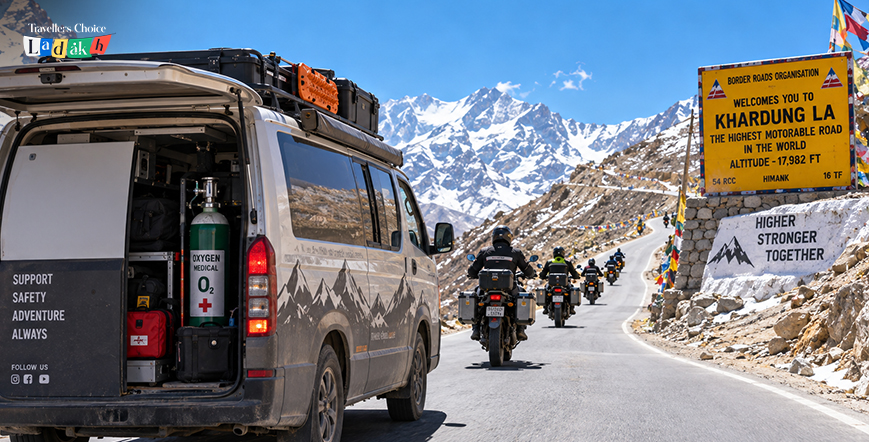
If symptoms kick in on the road, do not try to “tough it out” to the top of the pass.
The well-established first step in mountain sickness treatment is to stop rising. However, if symptoms don’t subside within 500 to 1,000 meters with rest, hydration, and mild pain relievers, the only sure cure is to descend immediately by 500 to 1,000 meters.
When you book a guided Ladakh bike trip package, you get high-altitude support vehicle backup equipped with medical oxygen cylinders. Having backup support on high passes ensures that if Acute Mountain Sickness turns severe, you can hop into a support vehicle while a mechanic handles your bike. Before heading out, read our detailed guide on acclimatization tips for Ladakh.
The Verdict
Respecting the mountains isn’t a weakness; it’s how you make it home with great stories instead of a medical evacuation bill. Take two days to rest, drink your water, listen to your body, and enjoy the ride.
The passes will still be there when you’re ready.
Frequently Asked Questions
The least severe and most common type of altitude sickness is AMS (Acute Mountain Sickness), which can cause headaches and nausea. HAPE is a condition in which there is fluid accumulation in the lungs, leading to severe shortness of breath. HACE (High Altitude Cerebral Edema) is brain swelling that results in confusion and loss of coordination. Both HAPE and HACE are medical emergencies that require immediate descent.
Drugs such as acetazolamide (Diamox) speed acclimatization by increasing breathing, but they do not guarantee complete acclimatization. Even with rest schedules and hydration, it is important to follow. Always ask a health care worker about medications for high altitudes.
No. Flying into Leh puts you at 11,500 feet (3,500m). Riding high passes on Day 1 or Day 2 drastically increases your risk of severe altitude illness. You must rest in Leh town for at least 48 hours to acclimatize.
Drink 3.5 to 4 liters of water or fluid (such as herbal teas or ORS electrolyte drinks) every day. Steer clear of alcohol, excessive amounts of caffeine, and smoking in the first days of acclimatization.