Spituk Gustor Festival: Sacred Masked Dance Rituals
High in the Himalayas, where prayer flags flutter in the cold wind, and ancient monasteries overlook dramatic valleys, Ladakh celebrates some of India’s most fascinating Buddhist festivals. One of the most visually striking among them is the Spituk Gustor Festival, held every year at Spituk Monastery near Leh.
This two-day festival brings together sacred rituals, colourful masked dances, music, and spiritual symbolism. For travelers and culture lovers, it’s a rare chance to witness Ladakh’s living traditions up close.
What Is the Spituk Gustor Festival?
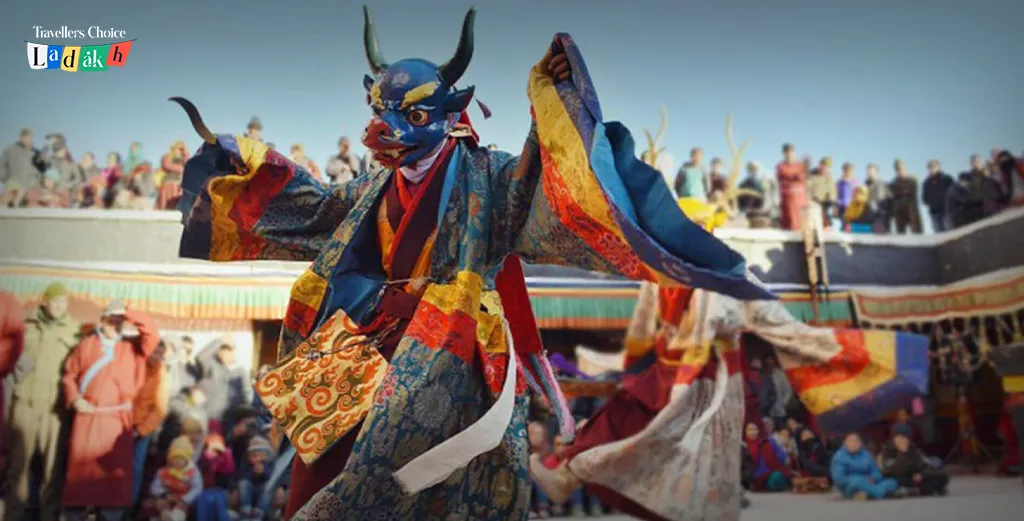
The word Gustor means “sacrifice of the 29th day” in the Tibetan Buddhist calendar. The festival marks the symbolic destruction of evil forces and negative energies. Monks perform sacred Cham dances wearing elaborate masks and silk robes, reenacting stories of protector deities and spiritual guardians.
Spituk Gustor is part of the wider tradition of Ladakhi monastery festivals connected to Tibetan Buddhism, especially the Gelugpa (Yellow Hat) order. The rituals are meant to cleanse the community spiritually and bring peace, prosperity, and protection for the coming year.
Why is the Spituk Gustor Festival Special?
What makes this festival unique is its powerful blend of ritual drama, spiritual storytelling, and Himalayan culture. It’s not just a performance-it’s a living religious ceremony.
Highlights You’ll Experience
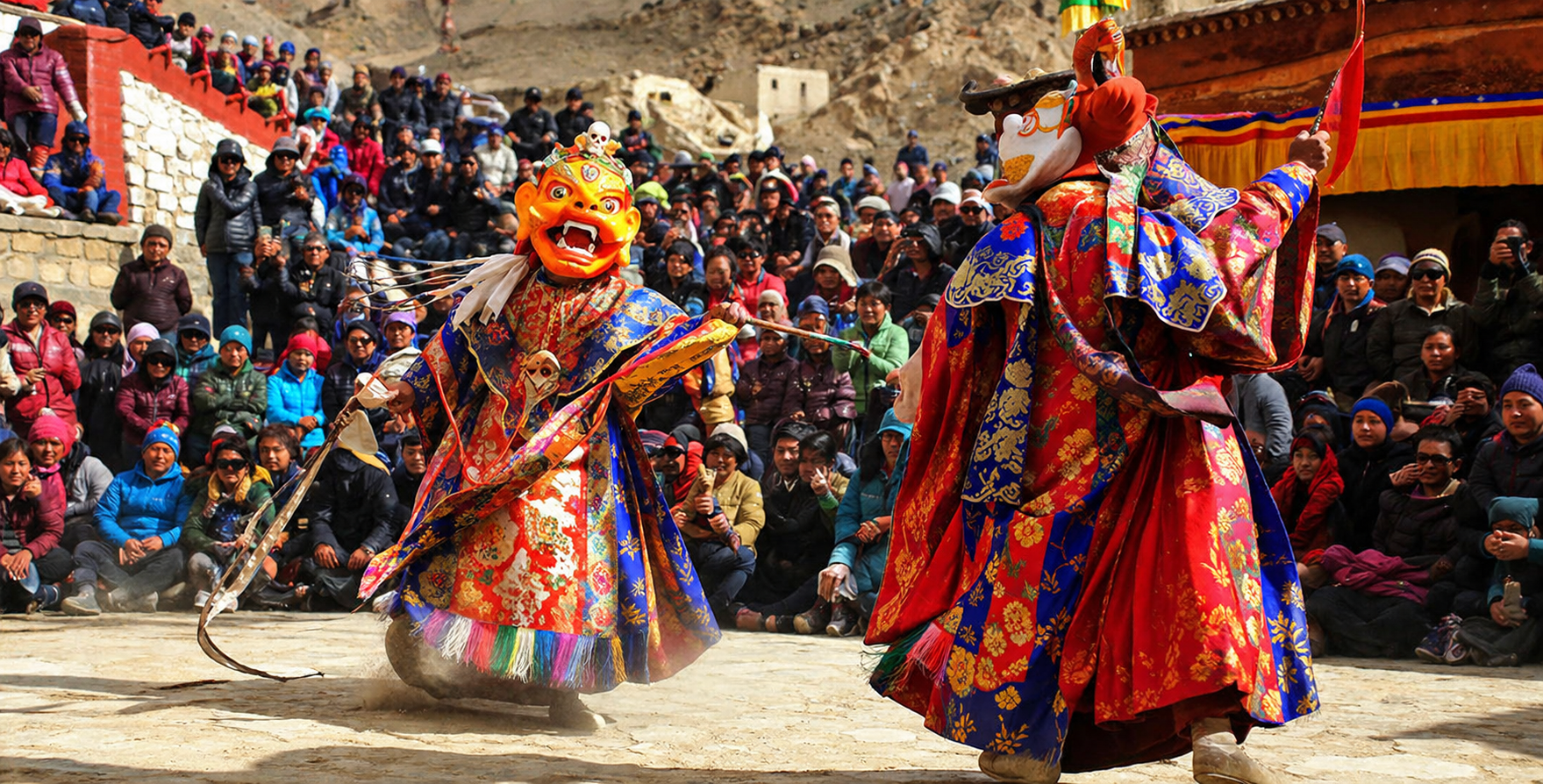
- Masked Cham Dances: Monks perform dramatic dances symbolizing the victory of good over evil.
- Traditional Music: Deep horns, cymbals, and drums set a mystical rhythm.
- Ritual Effigies: Symbolic destruction of evil at the end of the festival.
- Spiritual Atmosphere: Chanting and prayers fill the monastery courtyard.
- Cultural Photography: Bright costumes against stark mountain landscapes create unforgettable visuals.
Also Read: Chemday Wangchok Festival in Ladakh: A Complete Guide
Key Details at a Glance
| Detail | Information |
| Festival Name | Spituk Gustor Festival |
| Location | Spituk Monastery, near Leh |
| Duration | 2 days |
| Typical Time | January–February |
| Main Attraction | Cham masked dances |
| Significance | Removal of negativity, spiritual cleansing |
Best Time to Visit Spituk Gustor Festival
The festival usually takes place in January, during Ladakh’s harsh winter. While the cold can be intense, this season has its own charm: fewer tourists, snow-covered landscapes, and a deeply authentic cultural experience.
Travel Tip
- Pack heavy winter clothing. Temperatures often drop well below freezing.
- Roads to Leh may be closed in winter, so flights are the most reliable option.
How to Reach Spituk Monastery
Spituk Monastery is located around 8 km from Leh and is easy to reach.
Ways to get there:
- Fly to Leh and take a taxi to the monastery
- Local taxis and shared cabs from Leh
- Short hikes for those who enjoy walking in winter conditions (only with proper gear)
What to Expect During the Festival
The monastery courtyard becomes the main stage. Monks dressed as wrathful deities, guardians, and symbolic animals perform choreographed movements. Each step, gesture, and mask has meaning. The dances narrate ancient stories from Buddhist teachings and local legends.
Don’t Miss These Moments
- The opening prayers in the early morning
- The appearance of the Black Hat dancers
- The final ritual symbolizes the destruction of evil
Cultural Etiquette for Visitors
To respect local traditions, keep these points in mind:
- Dress modestly and warmly
- Ask before photographing monks or rituals
- Avoid interrupting prayers
- Don’t step into performance areas
- Maintain silence during chanting
Being respectful ensures a meaningful experience for both visitors and the local community.
Where to Stay Near the Festival
Most travelers stay in Leh and visit Spituk Monastery during the day.
Accommodation options:
- Budget guesthouses
- Mid-range hotels
- Traditional homestays for a local experience
Booking in advance is recommended, especially during festival dates.
Also Read: Ladakh Polo Festival: A Complete Guide to the Thrilling Polo Festival in Ladakh
Why You Should Add Spituk Gustor to Your Ladakh Trip
If you’re visiting Ladakh for its landscapes, the festival adds soul to your journey. It connects you to the region’s spiritual heartbeat and offers a rare look into monastery life during winter. Unlike peak summer festivals of Ladakh, Spituk Gustor feels intimate, peaceful, and deeply rooted in tradition.
Quick Pointers for Travelers
- Check festival dates before planning
- Carry thermal wear, gloves, and caps
- Keep extra batteries (cold drains power fast)
- Try local butter tea to stay warm
- Network can be weak-plan offline
Final Thoughts
The Spituk Gustor Festival is more than an event-it’s a window into Ladakh’s spiritual world. The rhythmic chants, vibrant masks, and powerful symbolism leave a lasting impression on every visitor. If you want to experience Ladakh beyond landscapes and adventure, this festival offers a meaningful cultural journey you’ll remember for life.
FAQs – Spituk Gustor Festival
- What is the Spituk Gustor Festival about?
It is a Buddhist monastery festival that symbolizes the destruction of evil and the triumph of good through sacred masked dances. - When is Spituk Gustor celebrated?
It is usually held in January or February, depending on the lunar calendar. - Is the festival suitable for tourists?
Yes, visitors are welcome. Just follow cultural etiquette and respect religious rituals. - How long does the festival last?
The festival is celebrated over two days. - Can I take photos during the festival?
Yes, photography is generally allowed, but avoid disturbing monks or sacred moments.